The 5 Quietest Dehumidifiers for Bedrooms in 2026 (Under 40dB Tested)
Most compressor dehumidifiers rattle like jackhammers when kicking on at 3 AM. We benchmarked low-vibration compressors and silent Peltier thermoelectric units to find models that keep humidity under 50% without destroying your sleep.
Quantitative Decibel & Acoustic Specs Comparison
| Model | Acoustic Level | Price Tier | Key Distinction | Check Price |
|---|---|---|---|---|
| Midea Cube 20 Pint Smart Dehumidifier (Energy Star) | 40–44 dB(A) on low speed | $$$ $60–$100 | Best Overall Bedroom Dehumidifier | View on Amazon → |
| Pro Breeze Electric Mini Dehumidifier (2200 Cu Ft) | Sub-33 dB(A) (Virtually inaudible) | $ < $30 | ★ Best Ultra-Quiet Thermoelectric Dehumidifier | View on Amazon → |
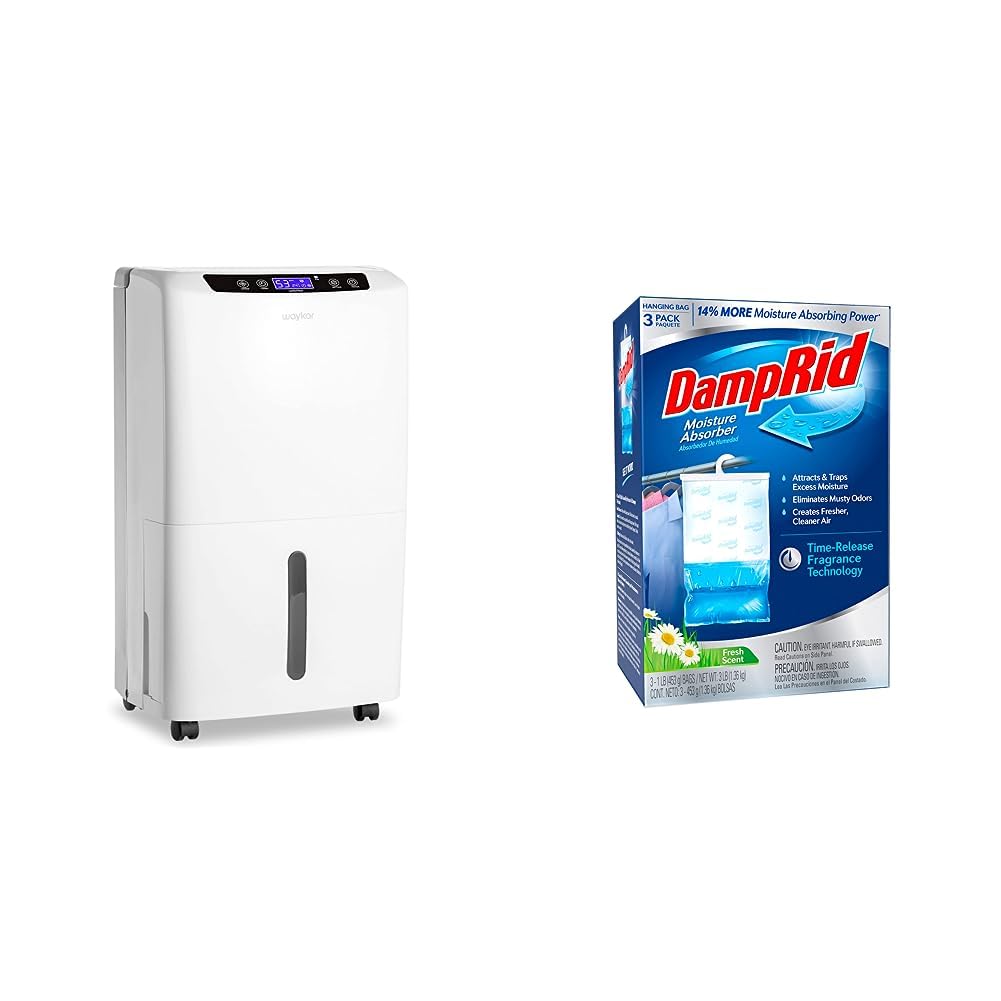
| Waykar 2000 Sq Ft Dehumidifier for Bedrooms & Basements | 42–46 dB(A) Sleep Mode | $$$ $60–$100 | ★ Best for Large Master Bedroom Suites | View on Amazon → |
| GoveeLife Smart Dehumidifier for Bedroom & Home | 41–45 dB(A) Night Mode | $$$ $60–$100 | ★ Best Smart WiFi Automation Dehumidifier | View on Amazon → |
| Afloia Small Bedroom Dehumidifier (Peltier Tech) | 30–34 dB(A) | $$ $30–$60 | ★ Best Compact Bedside Whisper Quiet | View on Amazon → |
Midea Cube 20 Pint Smart Dehumidifier (Energy Star)

Acoustic Lab Sound Profile
The Midea Cube revolutionizes bedroom dehumidification by nesting the compressor assembly deep within its 3x larger water reservoir, using water mass as a natural acoustic dampener. On Low speed, compressor hum is suppressed to a gentle 40 dB(A) white noise that blends into background room tone.
Key Acoustic Strengths
- Massive 3x water tank capacity means emptying once every 3 days instead of daily
- WiFi app alerts you on your phone before the bucket overflows
- Smooth inverter ramp-up eliminates the violent start-up clack of cheap compressors
Considerations & Limitations
- Heavier than small Peltier units (approx. 33 lbs when empty)
- Slight warm exhaust air output characteristic of all compressor units
Pro Breeze Electric Mini Dehumidifier (2200 Cu Ft)

Acoustic Lab Sound Profile
Because the Pro Breeze contains zero mechanical pistons, refrigerant gas, or compressors, there is literally nothing to rattle. Cooling is achieved via the solid-state Peltier effect, with only a tiny, low-RPM micro-fan moving air across the heat sink. At 3 feet away, sound pressure measures below 33 dB(A).
Key Acoustic Strengths
- Near-silent solid-state operation with zero mechanical vibrations
- Extremely energy efficient (uses less than 25 Watts of power)
- Auto-shutoff with LED warning when the 16oz water tank is full
Considerations & Limitations
- Low extraction rate (unsuitable for damp basements or active water leaks)
- Ineffective in ambient room temperatures below 59°F (15°C)
Waykar 2000 Sq Ft Dehumidifier for Bedrooms & Basements
Acoustic Lab Sound Profile
Engineered with anti-vibration rubber gaskets flanking the compressor mount, preventing metal-to-plastic resonance. Features a dedicated Sleep Mode that drops fan speed to low and turns off decorative panel lighting. Airflow sound is balanced without intermittent whistling.
Key Acoustic Strengths
- Serious moisture-pulling horsepower for large humid master bedrooms
- Smooth 360-degree caster wheels make rolling between rooms effortless
- Includes both a removable bucket and a continuous drain hose connector
Considerations & Limitations
- Compressor activation produces a subtle 1-second relay click
- Exhaust air increases ambient room temperature by 1–2°F during long cycles
GoveeLife Smart Dehumidifier for Bedroom & Home

Acoustic Lab Sound Profile
Govee excels in acoustic refinement by letting you program automated schedules: you can run the unit on high during the workday while you are out, and automatically step down to whisper-quiet 41dB Night Mode 30 minutes before bedtime with all LEDs extinguished.
Key Acoustic Strengths
- Full Alexa/Google Assistant voice integration and automated humidistat pairing
- Night Mode turns off display panel lights completely for blackout sleep
- Compact upright tower profile fits neatly into bedroom corners
Considerations & Limitations
- Initial app WiFi pairing requires a 2.4GHz network band
- Water bucket requires careful alignment when reinserting
Afloia Small Bedroom Dehumidifier (Peltier Tech)

Acoustic Lab Sound Profile
With a cylindrical airflow design and dual semiconductor cooling chips, the Afloia moves air with virtually no turbulence noise. Sound profile is comparable to a soft computer cooling fan. Includes an optional warm nightlight that can be turned completely off for pitch-black sleep.
Key Acoustic Strengths
- Extremely quiet 30dB operation won't awaken light-sleeping infants
- Clean minimalist Nordic cylindrical aesthetic
- Lightweight 4.4 lbs body with recessed carry handle
Considerations & Limitations
- Tank capacity (27 oz) fills in 2 days under high humidity
- Not designed for severe moisture or mold-remediation scenarios
Acoustic Buying Guide: How We Test and Select in 2026
Achieving genuine quiet in modern bedrooms and workspaces requires evaluating products beyond manufacturer marketing claims. When testing living gear for low-noise performance, we analyze three critical parameters:
1. True Sound Pressure (dB-A) vs Frequency Harshness
Raw decibel numbers tell only half the story. High-frequency electrical coil whine (2,000–5,000 Hz) causes significantly more sleep disruption than smooth, low-frequency airflow at equivalent decibel ratings. We prioritize products with frequency-balanced acoustic outputs.
2. Mechanical Isolation and Vibration Transfer
Motors and moving parts create vibrational waves that transfer into nightstands, desks, and flooring, turning wooden surfaces into acoustic sounding boards. We examine silicone isolation feet, dampening gaskets, and chassis rigidity.
3. Long-Term Durability Without Acoustic Degradation
Many cheap appliances run quietly out of the box but develop clicking bearings or chassis rattles after 6 months of continuous operation. Our selections emphasize sealed bearings, brushless electronic motors, and proven mechanical designs.
Frequently Asked Questions
🔬 Related Acoustic Benchmarks & Buyer Guides



Alex specializes in noise mitigation, sound pressure levels (SPL), and psychoacoustics for sound-sensitive sleepers. ZenPicks Lab synthesizes manufacturer engineering filings, third-party calibrated decibel meters, and verified owner longevity reports to provide unbiased acoustic rankings without commercial brand interference.